How Often Should You Replace Common Commercial Refrigeration Parts?
Maintenance intervals, warning signs, and when proactive replacement can pay off.
Hussmann Performance Parts Editorial Team | 2026 | parts.hussmann.com

Editorial Note: Service intervals referenced in this article are general guidelines informed by industry practice. Actual replacement timing should be based on inspection findings, manufacturer documentation, and the specific operating conditions of your equipment. This article reflects the editorial opinion of Hussmann Performance Parts and is not a substitute for a qualified service technician's assessment.
Why Replacement Intervals Matter
Commercial refrigeration equipment runs continuously — 24 hours a day, 365 days a year in most grocery and foodservice environments. That can put enormous strain on components that are often overlooked until they fail. By that point, the damage is usually compounded: a failed fan motor stresses the compressor; a clogged drain line leads to ice buildup that damages defrost heaters, coils, electrical components or even worse creates a safety hazard when water enters the floor area.
Proactive replacement on predictable intervals is not just good practice — it is how professional service teams keep case uptime high and emergency service calls low. Here are some common commercial refrigeration replacement guidelines for key components in the system.
Evaporator and Condenser Fan Motors
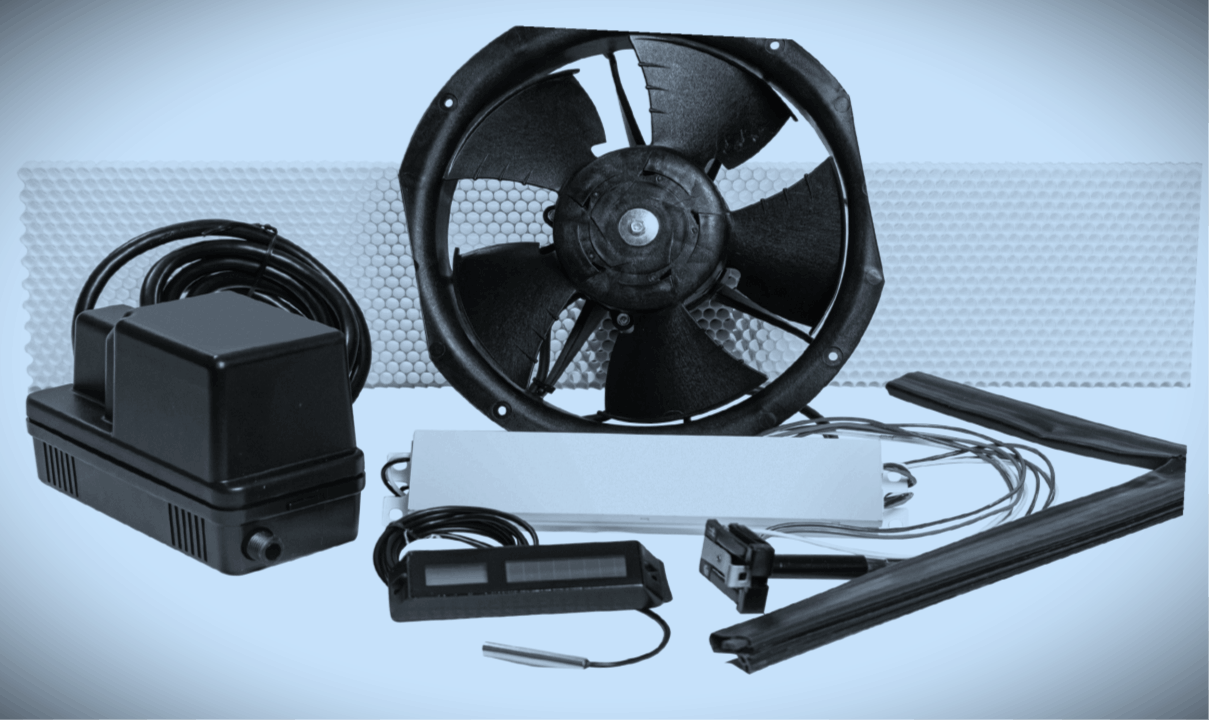
Fan motors in commercial display cases typically carry a service life expectation in the range of 3–7 years under continuous operation, though actual lifespan varies considerably based on environment, load, and maintenance history. Dirty coils force motors to work harder and shorten life significantly.
Opinion: In our experience working with service teams, fan motors are one of the most commonly deferred replacements. If a motor is showing signs of wear, abnormal noise, reduced airflow, or intermittent operation, replacement before failure is almost always less expensive than emergency service plus potential downstream effects including product loss.
Below are suggestions on how to check and replace these key components:
- Inspect annually for noise, vibration, and bearing wear.
- Inspect electrical connections and fan blades as well.
- Replace proactively if a unit is past 5 years and showing any performance decline. Be sure to replace all the motors in the case to maintain the same efficiency throughout the case.
- Clean condenser coils at least twice yearly to reduce motor strain.
- Where possible check Nuts, Bolts and Screws for proper tightness.
Door Gaskets and Seals
Door gaskets are a high-wear item with visible degradation. Cracked, torn, or compressed gaskets allow warm air infiltration, forcing refrigeration systems to work harder to maintain temperature. This directly impacts energy consumption and compressor wear. Have you ever looked into a freezer case and seen ice buildup on the ceiling of the case, tops of products or along the mullions of the case? A typical root cause culprit is the failed door gasket allowing warm air intrusion turning to ice.
A general industry guideline is to inspect gaskets at least annually and replace them when cracking, hardening, or visible air gaps are present. In high-traffic environments, this may happen every 2-3 years. Consider doing line-ups vs. single cases and scheduling at periods that minimize impact to store operations. Perform the “dollar test” to confirm gaskets are sealing properly.
Opinion: We believe gaskets are among the most undervalued maintenance items in a typical service program. They are relatively inexpensive to replace and have an outsized impact on system efficiency and temperature stability.
Defrost Heaters
Defrost heaters in reach-in and display cases operate on timed cycles and are subject to thermal stress. Failure is often gradual — reduced defrost effectiveness leads to frost accumulation, which is frequently misdiagnosed as a refrigerant or controls issue before the heater itself is tested.
- Inspect annually during scheduled PM visits.
- Test electrical resistance and continuity as part of routine diagnostics.
- Replace proactively if resistance readings are outside specification.
- Consider stocking a couple sizes of defrost heaters at a central location to minimize freight costs of single heaters.
Controls and Electronic Components
Temperature controls, defrost timers, and electronic control boards do not follow predictable wear intervals — they tend to fail without much warning. The best strategy for controls is environmental: keep panels clean, dry, and protected from pest intrusion, which is a leading cause of premature board failure in food-retail settings.
Opinion: We recommend stocking at least one spare control board for high-priority cases — particularly those on complex multi-deck runs where a single failed board can take down an entire section.
A Note on 'Replacement Interval' Claims
You will see a wide range of specific service interval claims in the industry. Many of these originate from manufacturer documentation, which tends to reflect optimal conditions. Real-world environments — high ambient temperatures, variable humidity, heavy door traffic — can shorten these intervals considerably. Always treat published intervals as minimums, not guarantees.
Find genuine Hussmann OEM parts at parts.hussmann.com.
Search by model, part number, or category — with same-day shipping on stocked items.